Trending
You’re Not Imagining It :Rising Prices 2026 Are Making Your Paycheck Feel Smaller

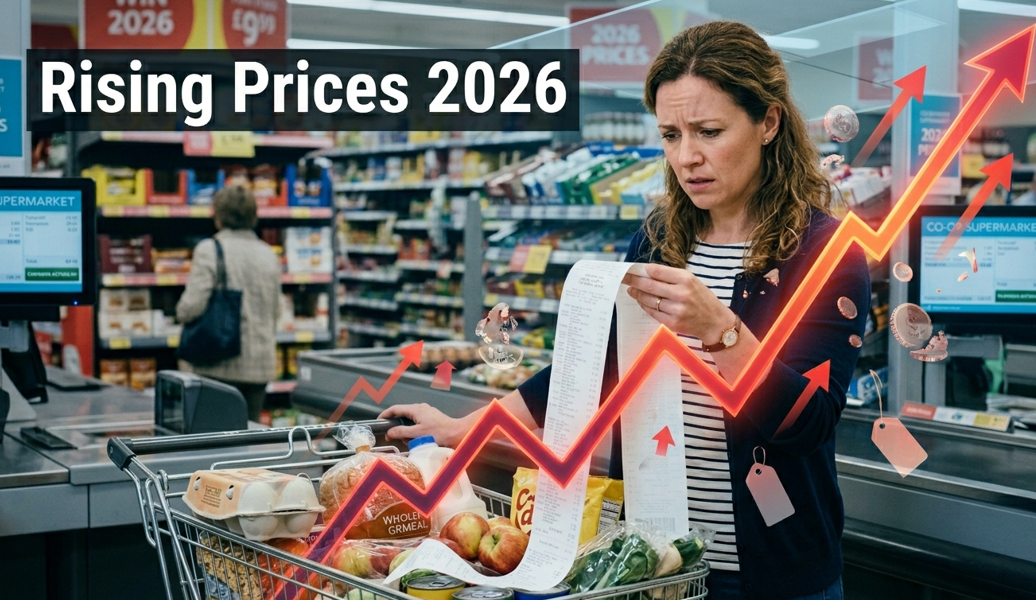
Let’s talk honestly. Your grocery bill is higher than before. Filling up gas feels painful every single time. Rent keeps going up. And even if your salary stayed the same, it just doesn’t stretch as far as it used to.
You are not alone. Rising prices in 2026 are squeezing American families from every direction — and millions of people are asking the exact same question right now:
Why has everything become so expensive — and when does it stop?
Here’s the straight answer.
The Reality Behind Rising Prices in 2026
Let’s start with the real numbers — because they matter.
In April 2026, inflation rose to 3.8% — the highest level in three years. Prices are rising faster than wages, which only grew by 3.6% over the same period.
That tiny gap of 0.2% is the difference between keeping up and slowly falling behind. And right now, millions of American families are falling behind.
Economist Heather Long from Navy Federal Credit Union explained it clearly:
“Inflation is the key drag on the U.S. economy now. For the first time in three years, inflation is eating up all wage gains. This is a real setback for middle-class and lower-income households — and they know it.”
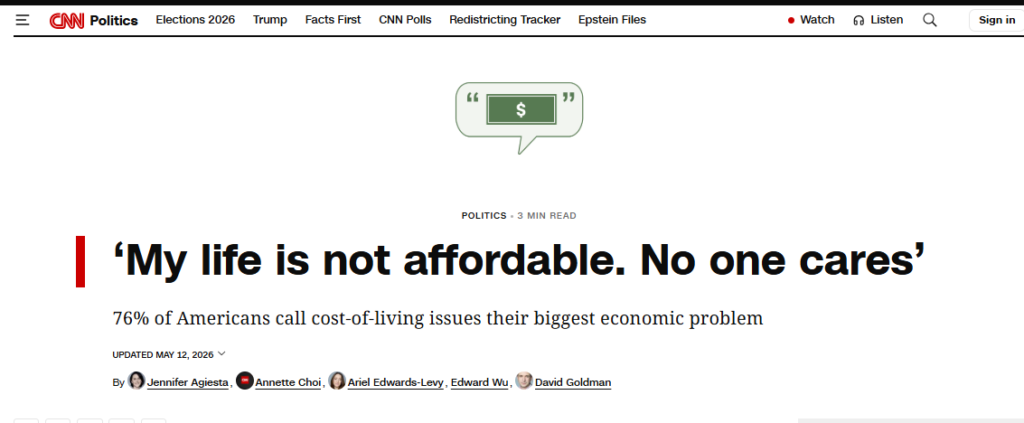
A recent CNN poll confirmed exactly that. A full 76% of Americans say rising prices are their single biggest financial concern right now. Not crime. Not politics. Prices.
Why Is Everything So Expensive Right Now?
There isn’t just one reason. There are three and they are all hitting at the exact same time.
1. The War in Iran Is Driving Everything Up
This is the biggest one — and it starts at the gas pump.
Since the Iran war began in February, the Strait of Hormuz — a narrow waterway that carries a huge share of the world’s oil — has been partially blocked. That one bottleneck changed everything almost overnight.
Oil is now trading above $100 a barrel. The national average for gas has hit $4.50 a gallon — a four-year high. In California, drivers are paying around $6.15 a gallon. Only Oklahoma still averages below $4.00.
But it doesn’t stop at the pump. Diesel powers the trucks, tractors, and fishing boats that move and grow your food. When diesel goes up, so does the cost of everything those vehicles carry — meat, vegetables, bread, cereal, all of it.
Energy prices have jumped 17.9% over the last 12 months. Gasoline alone is up 28.4% year over year. These are not small numbers — and you are feeling every bit of them.
2. Tariffs Are Adding More Pain
The Iran war isn’t the only pressure pushing prices up.
President Trump’s sweeping tariff regime has made many imported goods significantly more expensive. Clothing, electronics, and other products that rely on overseas manufacturing now cost more — and companies are quietly passing those costs straight to you at checkout.
Clothing prices alone jumped 4.2% in the past year — the fifth straight month of increases and the biggest rise in three years. Brands like H&M and Zara, which depend on overseas supply chains, have raised prices to protect their profits.
Some companies tried to hold prices steady by stockpiling goods before tariffs hit. But that buffer is now running out — and prices are climbing fast.
3. Grocery Prices Are at a Three-Year High
Your grocery bill is not your imagination either.
Food prices overall are up 3.2% compared to last year. Groceries specifically — what you buy at the supermarket — jumped 2.9% in the past 12 months. That is the highest rate since August 2023, when post-pandemic inflation was still burning hot.
In April alone, grocery prices had their biggest single-month jump in nearly four years.
Meat and seafood are hit especially hard. Some shrimp boats haven’t even left the dock this spring because diesel costs so much it isn’t worth going out. That shortage quietly shows up on your grocery store shelves — and in your bill.
Real Americans Are Feeling It Every Day
This is not just numbers on a government report. Real people are changing how they live right now.
Daniel Heffner, a Texas resident who lost his engineering job in 2024, now drives for rideshare and delivery apps. With gas prices so high, making ends meet has become a daily struggle. He told NPR what it actually feels like:
“I’ve been noticing the rising prices of groceries at the store. For a while, I didn’t purchase things because they were too expensive — and it was bad for my health. I lost weight.”
He eventually had to start buying food again just to stay healthy — even though it was stretching his already tight budget every single week.
Small business owners are hurting too. In Columbus, Ohio, homebuilder Saeed Nassef said construction material costs have skyrocketed and his electricity and heating bills have doubled. His neighbor — a flooring contractor — told him last week he had no money left in the bank.
These are not unusual stories anymore. Across America, ordinary people are making hard choices — between gas and groceries, between bills and basics.
Will There Be Any Relief Soon?
Honestly, probably not right away. And that’s the truth worth knowing.
When inflation runs this hot, the Federal Reserve keeps interest rates high to slow things down. High rates make borrowing more expensive — meaning higher mortgage payments, costlier car loans, and tighter credit for small businesses trying to survive.
Inflation is currently at 3.8% — almost double the Fed’s 2% target. Rate cuts are unlikely until that number drops significantly. So the pressure on home buying, car payments, and business loans continues for now.
Three Things to Watch in the Coming Months
These will tell you more than any official statement about whether relief is actually coming:
- The Strait of Hormuz — If the Iran situation calms and oil shipping resumes normally, gas prices could drop within weeks. Everything connected to fuel would follow.
- Tariff negotiations — Any new trade deals reducing tariffs on imported goods would ease costs on clothing, electronics, and food fairly quickly.
- Federal Reserve decisions — If inflation cools even a little, the Fed may signal interest rate cuts — which would help mortgages, car loans, and business borrowing.
For a deeper look at how inflation is measured and why it sometimes doesn’t match what you feel at the store, the Slate economics team has an excellent breakdown worth reading:
Small Practical Steps You Can Take Right Now
You cannot control global oil prices or government decisions. But small moves add up fast and in a tight month, saving $40 to $60 across these steps is real money:
- Choose store-brand products, which have held prices lower than name brands in almost every category
- Plan meals around weekly sales apps like Flipp, which show deals at stores near you
- Combine all your errands into one trip; fewer car trips directly cut your gas spending
- Delay big purchases for now, cars, appliances, and electronics are all inflated right now
- Cancel subscriptions you forgot about — most Americans are paying for 2 or 3 they don’t use
- Use the GasBuddy app — it finds the cheapest gas within a few miles of you every single day
These steps won’t fix the big picture. But they put money back in your pocket while the big picture sorts itself out.
Bottom Line
Rising prices in 2026 are not happening by accident. The Iran war, government tariffs, and high interest rates are all hitting American families at the exact same time pushing up gas, groceries, rent, and clothing costs all at once.
We cannot control these big global events. But understanding exactly why this is happening helps us make smarter decisions with the money we do have.
Things will get better eventually. The honest question is how long can families hold on until they do?

 WORLD NEWS2 weeks ago
US-Iran War 2026: How It Started, What It Cost, and Where It Stands Today

 Tech5 days ago
Best Free AI Tools Everyone Is Using in 2026.

 Tech3 days ago
SpaceX New IPO 2026: Everything You Need to Know Before Investing Date, Price, Ticker and Risks

 Trending2 weeks ago
San Diego Mosque Shooting 2026: The Hero Who Stood Between Gunmen and 140 Children