WORLD NEWS
US-Iran War 2026: How It Started, What It Cost, and Where It Stands Today

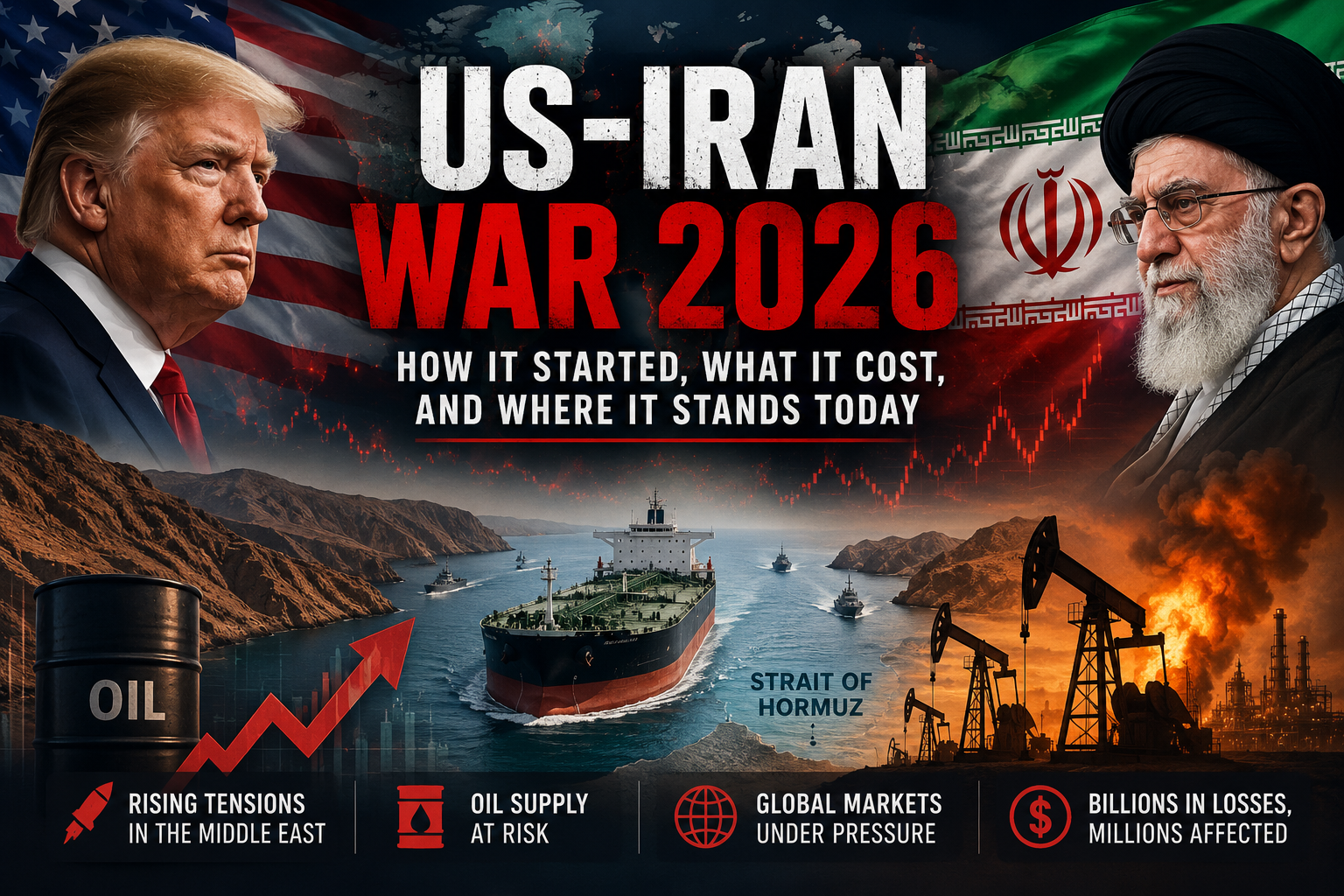
On the morning of February 28, 2026, the United States and Israel launched a surprise military attack on Iran. No war had been formally declared. No public warning had been given. The world simply woke up to the news that one of the most significant conflicts in decades had already begun.
Eighty-two days later, the US-Iran War 2026 has killed thousands of people, disrupted the global oil supply, and pushed the Middle East into its most dangerous period in years. A ceasefire is technically in place but it is fragile. Just this week, President Trump gave Iran two to three days to reach a final peace deal. Iran responded by warning that any new fighting would bring what it called “many more surprises.”
Here is everything you need to know written simply and clearly.
How the War Started
The US and Iran had been in conflict for years over Iran’s nuclear program. In early 2026, peace talks were still ongoing, with Oman helping both sides communicate. There was some hope a deal could be reached. But President Trump said publicly he was not happy with how the talks were going. Shortly after, the negotiations fell apart completely.
On February 25, the United States placed fresh sanctions on more than 30 Iranian individuals and oil tankers. Three days later, on February 28, the US and Israel launched a large military operation called Operation Epic Fury.
The strikes hit military bases, government buildings, and leadership targets across Iran. Iran’s Supreme Leader Ali Khamenei was killed in the opening attack. Hundreds of civilians also died in those first hours. It was a shock to the entire world.
How Iran Fought Back
Iran did not wait long to respond. Within hours, it launched hundreds of missiles and thousands of drones at Israel, at US military bases across the Gulf, and at American allies including Saudi Arabia, the UAE, Qatar, and Bahrain. A US Embassy building in Baghdad was hit. Israeli cities came under attack.
But Iran’s most powerful response was not a military strike. It was a decision to close the Strait of Hormuz.
Most people have never heard of the Strait of Hormuz. But it is one of the most important places on earth for the global economy. Before the war, about 25 percent of the world’s oil supply passed through this narrow waterway every single day. Around 3,000 ships used it every month.
When Iran closed it, oil prices jumped above 100 dollars per barrel almost immediately. Countries across Asia faced fuel shortages. Airlines cancelled flights across the region. Shipping companies had to reroute their vessels all the way around Africa, adding weeks and millions of dollars in extra costs to every journey.
One decision, in one narrow stretch of water, affected the entire world.
The Real Human Cost
It is easy to focus on oil prices and politics. But the real story of this war is about people.
Thousands have been killed in Iran and Lebanon. According to Pentagon figures, 348 American service members were wounded and dozens were killed in just the first five weeks of fighting. Millions of people have been forced to leave their homes.
Lebanon was pulled into the conflict through Hezbollah, and more than one sixth of its entire population was displaced. Inside Iran, ordinary people have suffered the most. The country’s internet has been shut down for 82 straight days — one of the longest internet blackouts in modern history, according to the monitoring group NetBlocks.
Families cannot communicate. Neighborhoods have been destroyed. The economy has collapsed under the weight of the war and years of sanctions. Iran’s own government has estimated its economic losses at somewhere between 300 billion and one trillion dollars.
Pakistan Helped Broker a Ceasefire
By late March, with the war still raging and no end in sight, Pakistan stepped in.
Working together with China, Pakistan put forward a five-point peace plan. On April 8, 2026, the United States and Iran agreed to a two-week ceasefire, with Pakistan serving as the key mediator. It was a significant moment for Islamabad on the world stage.
But the peace did not hold cleanly. Iran demanded war reparations, security guarantees, and recognition of its control over the Strait of Hormuz. The United States rejected all three conditions. Talks in Islamabad collapsed. Washington then imposed a naval blockade on Iranian ports.
The ceasefire remained in place on paper but both sides kept testing each other.
Where Things Stand Right Now
This week, the situation became more urgent.
President Trump gave Iran a deadline of two to three days to reach a deal, warning that the consequences of failure would be serious. On May 18, Trump reportedly called off a planned strike on Iran after Gulf Arab leaders asked him not to escalate further. They were worried about what another round of fighting would do to their economies.
At the same time, the US Senate moved forward with a bill calling for a formal end to the war — a sign that many in Washington want a negotiated solution rather than more military action. The United Nations Security Council has already passed a resolution calling for attacks on civilians to stop and for the Strait of Hormuz to be reopened to normal shipping.
Oil prices are still rising and falling with every news update. Shipping through the Strait remains far below normal. Peace talks are stuck. And Trump’s clock is ticking.
Why This War Affects You Too
This conflict is not just a Middle East problem. It is a global one.
When oil prices go up, the cost of fuel goes up. When fuel goes up, food and transport and almost everything else becomes more expensive too. People in countries thousands of miles from Iran are already paying more at the gas station and the grocery store because of this war.
For Pakistan, the stakes are especially personal. The country played an important role as a peace mediator, earning genuine respect internationally. But Pakistan also depends heavily on Gulf oil imports. Every week the Strait of Hormuz stays disrupted, it puts more pressure on Pakistan’s fuel supply, inflation, and economy.
For the United States, the war also raises bigger questions about what happens if a similar conflict ever breaks out near Taiwan — another small but critically important waterway for global trade.
Three Things That Will Decide What Comes Next
The next few weeks will be shaped by three things.
First — whether Iran and the United States can reach a deal before Trump’s deadline runs out. A deal would lower oil prices and stabilize the ceasefire. No deal could mean renewed fighting.
Second — whether the Strait of Hormuz fully reopens to commercial shipping. Until it does, the global economy will keep feeling the pressure.
Third — how stable Iran remains from the inside. After 82 days of war, internet blackout, and economic collapse, the situation inside the country is deeply uncertain. How Iran’s new leadership handles this moment will matter enormously for what comes next.
The Bottom Line
The US-Iran War 2026 has been one of the most disruptive global events in recent memory. Thousands of people have died. Millions have lost their homes. Oil prices have swung wildly. And the world’s most important oil shipping route is still barely functioning.
The ceasefire is holding for now. But with Trump’s latest deadline and Iran’s defiant response, the next 48 to 72 hours could determine whether this war finally ends or enters a far more dangerous chapter.
The world is watching. You should be too.
For detailed background on this conflict: Britannica 2026 Iran War
Follow Blogy Wire for daily updates on the US-Iran War 2026 and all major world news stories.
Also Read: San Diego Mosque Shooting 2026 The Hero Who Saved 140 Children